
AI visibility describes how often and how well your brand appears in answers from ChatGPT, Perplexity, Gemini and Google’s AI Overviews. Many companies are noticing right now that their Google rankings are stable, yet fewer and fewer clicks reach the website. The reason is that users often find the answer to their search at the top, in the AI summary.
Here you learn which metrics describe AI visibility, where you get the data and why the numbers fluctuate more than any ranking. Including a calculation of how many queries you need for a reliable result.
Key takeaways
- Definition: AI visibility is the share of AI answers on your topics in which your brand is mentioned or your page is linked.
- Metrics: Mention rate, citation rate, share of voice and sentiment. There is no position like in Google rankings.
- Market: Google holds around 95% of desktop search engine usage in Europe. AI assistants are growing fast, with ChatGPT leading at 45%. Both worlds need their own measurement.
- Three data sources: Search Console (impressions in AI Overviews and AI Mode), GA4 (visits from AI assistants) and prompt tracking tools.
- Fluctuation: The same question almost never returns the same list of brands. That is why a share across many runs is measured.
- Rule of thumb: 40 prompts, 4 assistants, 3 runs make 480 answers. Below that, results get random.
- Limit: According to Google, no third party has access to its AI systems. Every tool measures a sample.
On this page:
- What is AI visibility?
- Where does AI search happen?
- Which metrics describe AI visibility?
- Where do you get the data?
- Why do the numbers fluctuate so much?
- How do you build a prompt set?
- What does AI visibility do for the business?
- FAQ
What is AI visibility?
In classic search, visibility is a position: rank 1 to 10. In AI answers there is no fixed order. The LLM writes a new answer for every query, naming three brands one time and seven the next. You are visible if you appear in that answer and, ideally, are linked as a source.
SEO VISIBILITY 10 links, one ranking goal: position 1, click AI VISIBILITY one answer, few sources goal: named and cited measured as a probability
How much this matters is shown by a study from Pew Research: with an AI summary, users clicked a regular result in 8% of searches, compared with 15% without one. Only 1% clicked a link inside the summary itself. If you do not appear in the answer, you are often not seen at all.
Visibility in AI is a share, not a position.
In short: AI visibility measures the percentage of relevant answers in which your brand appears. Everything else on the basics is in the GEO Handbook.
Where does AI search happen?
AI answers are created in two places. Google builds them straight into search: as AI Overviews above the results and as AI Mode in its own tab. Alongside are standalone assistants such as ChatGPT, Gemini, Claude, Perplexity and Copilot. Both worlds draw their answers from different sources and therefore need separate measurement.
AI SEARCH│├─ IN GOOGLE AI Overviews, AI Mode│ you search as usual└─ OWN APPS ChatGPT, Gemini, Claude, Perplexity, Copilot you ask in a chat
How big is each share?
Google continues to dominate search. In Europe, around 95% of desktop search engine usage goes to Google, while AI tools account for 1.7% of all desktop activity (Datos/SparkToro). How big AI search really is remains disputed, though.
Among AI tools, ChatGPT is clearly ahead but is losing share to Gemini and Claude. Perplexity and Copilot each stay below 5% in Europe.
ChatGPT ██████████████████████ 45 %Gemini █████████ 19 %Claude █████ 10 %Perplexity, Copilot each under 5 %
At the same time, AI inside Google itself is growing: by mid-2025, more than 2 billion people a month were seeing AI Overviews (TechCrunch). In Germany, too, the search engine remains the first port of call.
AI search does not replace Google. It comes on top.
My recommendation: for most brands in Germany, AI search today happens mainly inside Google. So start with AI Overviews, but measure the assistants separately. According to Growth Memo, 91% of cited sources appear on only one of three platforms: ChatGPT, Perplexity or AI Overviews. Being visible in Google does not automatically make you visible in ChatGPT.
Which metrics describe AI visibility?
Four metrics are enough for almost any report. All of them refer to a fixed set of prompts that you query regularly.
| Metric | Question and calculation |
|---|---|
| Mention rate | Does my brand appear? Answers with a mention ÷ all answers |
| Citation rate | Is my page linked? Answers with a link to your domain ÷ all answers |
| Share of voice | How do I compare with competitors? Your mentions ÷ mentions of all brands |
| Sentiment | How am I talked about? Share of positive, neutral, negative mentions |
AI VISIBILITY├─ Presence Mention rate│ do you appear?├─ Source Citation rate│ are you linked?├─ Competition Share of voice│ how much of the pie?└─ Quality Sentiment how are you talked about?
From my practice: what I look at
For AI visibility I mainly look at sources, mentions, citations and share of voice, always relative to the competition. Which of our sources are cited most often and most prominently? What is our share of voice, what is our sentiment? Finally, I also look at the individual features.
And one topic must not be missing: reputation. How visible a brand is outside its own site, i.e. where users talk about brands and categories on the web, I check with my own tools, including kywrd.ai.
Many tools roll this up into a single “visibility score”. That is convenient for management but too coarse for decisions. A high mention rate with negative sentiment is a different problem from a low mention rate with many citations.
My recommendation: report share of voice against your three most important competitors. Management and sales understand this number immediately.
This is what it looks like in practice. For Placetel we track 75 prompts daily in ChatGPT, Perplexity and AI Overviews. Over 30 days that is 6,600 answers. Placetel appears in 47% of them and is named as the first brand in 17%. Competitors are anonymized.
Placetel ██████████████████████ 22 %Provider B ████████████████ 16 %Provider C ██████████████ 14 %Provider D ██████████████ 14 %Provider E ███████████ 11 %
Where do you get the data?
No single source shows the whole picture. Only together do they make a reliable statement.
Google Search Console
Since the end of August 2026 there has been the Generative AI performance report. It shows how often your pages were counted as an impression in AI Overviews and AI Mode, broken down by page, country, date and device.
Watch out: the report shows no queries and no clicks. So you see which page appears, but not for which question. For ChatGPT, Perplexity and co. it tells you nothing at all.
Google Analytics 4
You recognize visits from AI assistants by their source. Create a dedicated channel group for this, for example with the pattern chatgpt\.com|perplexity\.ai|gemini\.google\.com|copilot\.microsoft\.com|claude\.ai. The numbers are usually small but show which pages get clicked from AI answers.
In my experience, this tracking is only moderately reliable. Not every visit from an AI app arrives with a source; some end up under “Direct”.
Server logs
The most reliable source is your server logs. When an assistant fetches your page live for an answer, it leaves an entry there, for example with the user agent ChatGPT-User or Perplexity-User. This happens even when nobody clicks.
My recommendation: if you have access to the logs, analyze them. For several clients this is our best real data source, far more accurate than analytics.
Prompt tracking tools
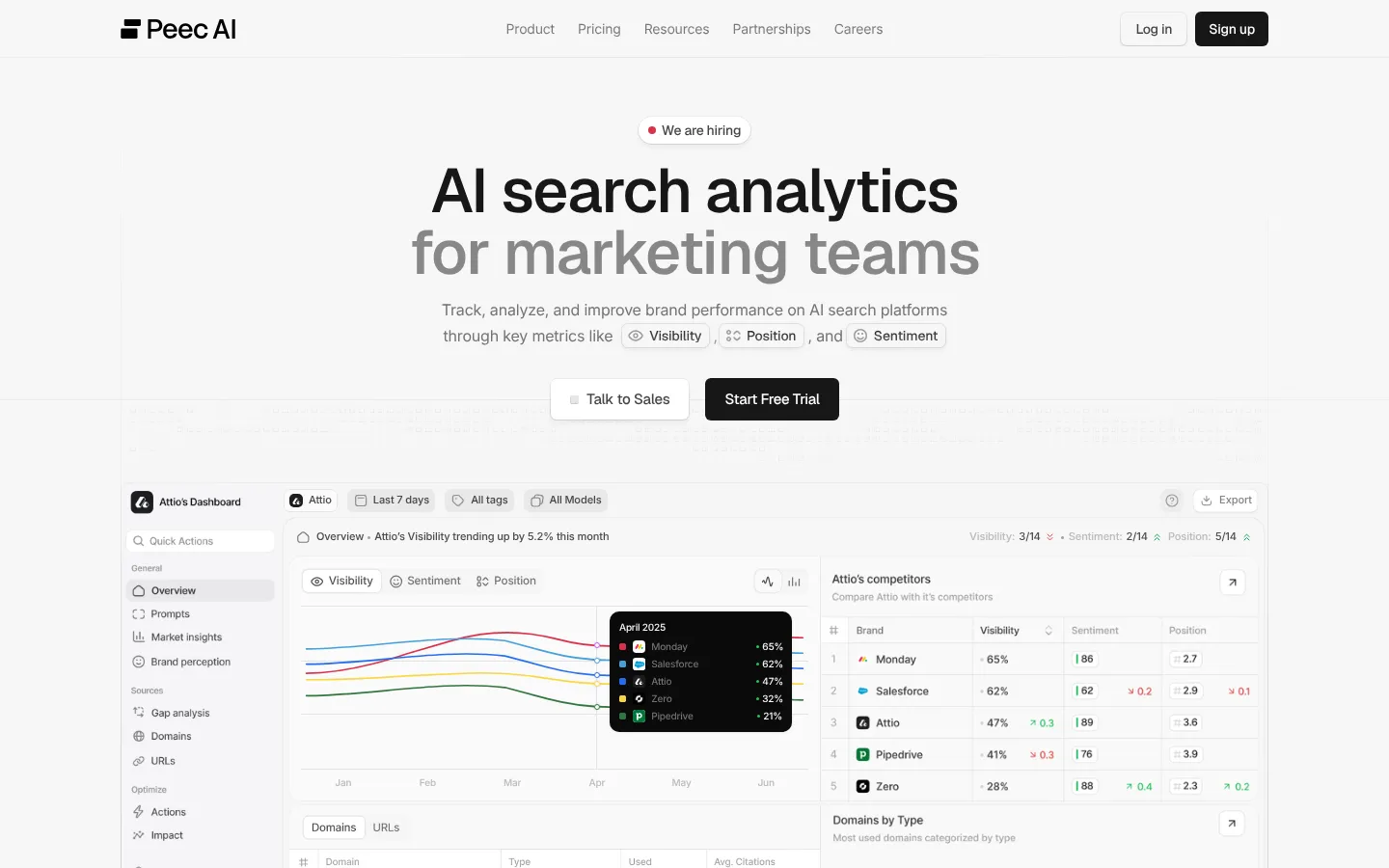
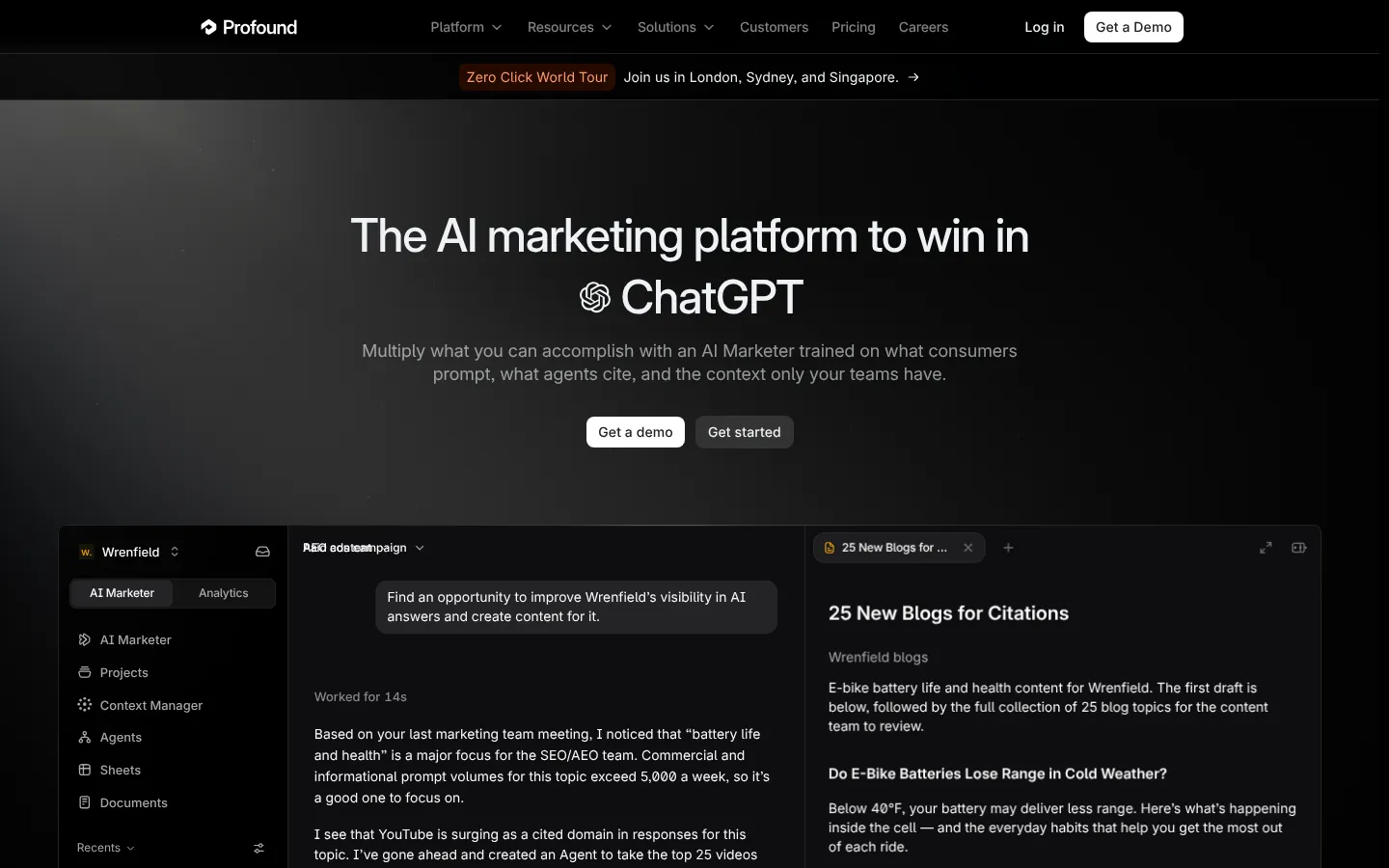
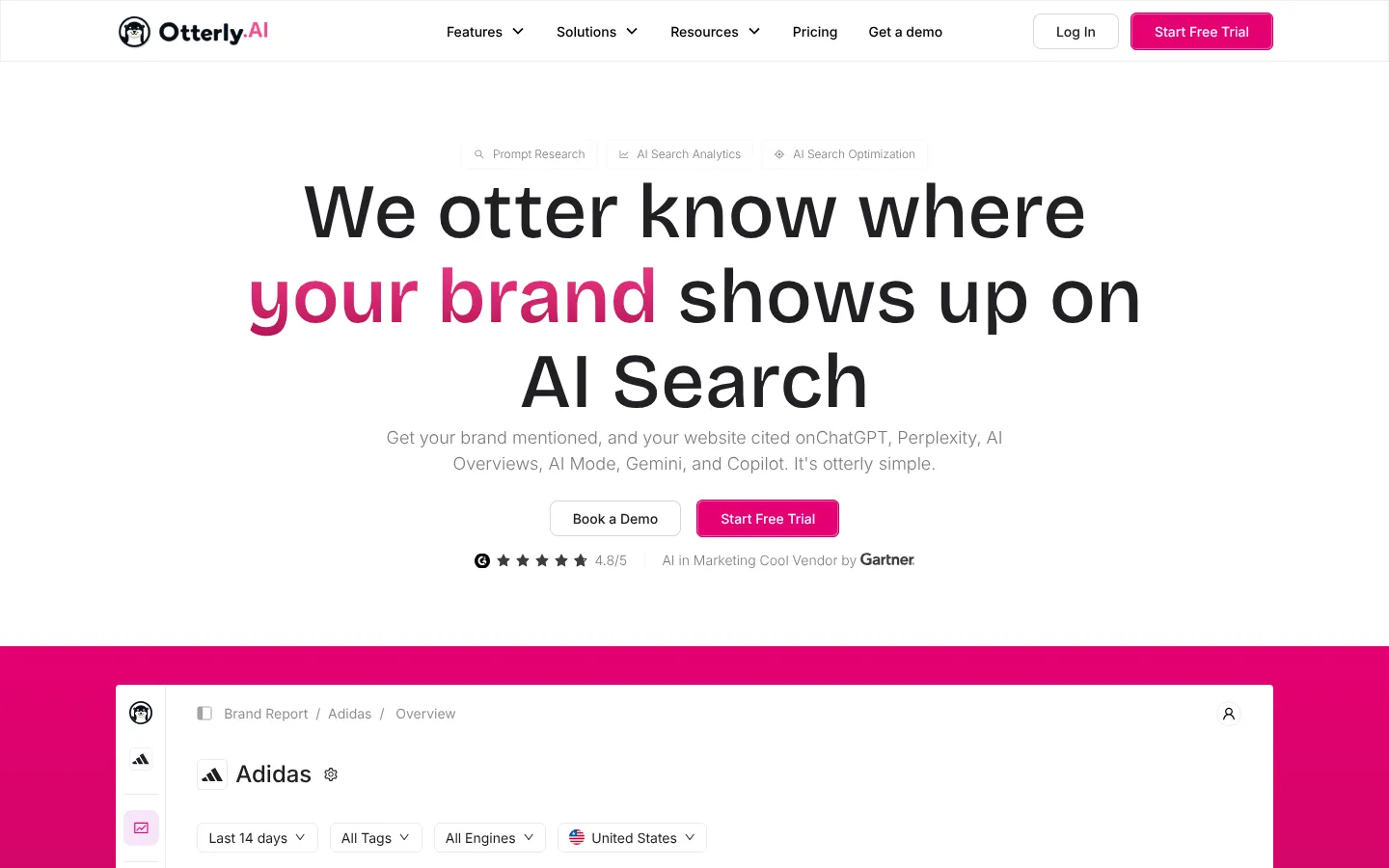
Tools such as Peec AI, Profound or Otterly regularly send your prompts to several assistants and analyze the answers. They are the only source for mention rate, share of voice and sentiment.
Important for context: Google writes in its guide to AI features, that no third party has access to its internal ranking or AI systems. Every tool queries from the outside and measures a sample.
SEARCH CONSOLE shows impressions in AIO, AI Mode misses queries, clicks, ChatGPT GA4 shows visits from AI assistants misses mentions without a click PROMPT TRACKING shows mentions, citations, SoV misses real search volume
Why do the numbers fluctuate so much?
AI answers are not deterministic. SparkToro and Gumshoe tested this with almost 3,000 runs: the chance of getting the same list of brands twice for the same question was below 1 in 100. The same order came up less than once in 1,000 runs.
Run 1 ■ named Rank 2Run 2 ■ named Rank 4Run 3 □ missingRun 4 ■ named Rank 1Run 5 □ missing─────────────────────────────Mention rate 3 of 5 = 60 %
The authors’ conclusion: a share across many answers is a meaningful metric, a “position” in AI answers is not. For you this means: measure often enough for chance to even out.
40 prompts your topics × 4 assistants ChatGPT, Gemini, Perplexity, AIO × 3 runs per measurement ───── 480 answers every month
From my practice: one query is not a measurement
The most common false conclusion I see is with AI Overviews: someone googles their own core topic once, doesn’t find the brand in the overview and concludes it is invisible. But a single answer is a sample of one. Only many answers show where a brand really stands.
How stable the share is with enough answers is shown by Placetel: the mention rate has been between 45 and 50% for eight weeks. Individual answers jump around, the share moves within a narrow band.
CW 36 ███████████████████████ 46 %CW 37 ██████████████████████ 45 %CW 38 █████████████████████████ 50 %CW 39 ████████████████████████ 48 %CW 40 ██████████████████████ 45 %CW 41 ███████████████████████ 46 %CW 42 ████████████████████████ 49 %CW 43 ████████████████████████ 49 % about 1,540 answers per week
A second reason why a single overall value is misleading: every assistant is a market of its own. The same brand is only half as visible in Perplexity as in AI Overviews.
AI Overview ████████████████████████ 60 %ChatGPT █████████████████████ 53 %Perplexity ████████████ 30 %
So report the values per assistant, not just as an average.
Tip: only compare months if prompts, assistants and country stayed the same. Changing the prompt set changes the number, not the visibility.
How do you build a prompt set?
In GEO, a prompt is what a keyword is in SEO. A good set reflects what your customers really ask and mixes four types:
| Type | Example and purpose |
|---|---|
| Category | Which cloud phone system for small businesses? This is where it is decided whether you make the list. |
| Comparison | Provider A or provider B? Shows how AI ranks you against competitors. |
| Problem | How do I connect my phone system to the CRM? Early stage, often with citations. |
| Brand | Is provider A trustworthy? Checks sentiment. |
Watch out: brand prompts artificially inflate any mention rate because your brand is already in the question. Analyze them separately.
Start with 30 to 50 prompts. Derive them from your most important keywords, questions from sales and support, and “People also ask” in Google.
From my practice: the prompt set mirrors the portfolio
At Placetel, the number of prompts per topic reflects the product portfolio. The cloud phone system is the core product and gets almost half of the prompts. We agreed on the split together with Placetel. That way the total shows how visible the business is, not how many prompts happen to belong to a side topic.
Cloud phone system ██████████████████ 36Voice AI ██████ 13Business telephony ██████ 11Virtual PBX ████ 9Unified Comm. ███ 6
What does AI visibility do for the business?
A direct click from an AI answer is rare. The effect shows more indirectly: more searches for your brand name, more direct visits, more enquiries in which customers say “ChatGPT recommended you”. Ask in your contact form how someone found you. At Placetel we added exactly this field.
MENTION IN AI ANSWER │ ├─▶ Brand search on Google │ Search Console, brand keywords ├─▶ Direct visit │ GA4, Direct └─▶ Enquiry "via ChatGPT" form field, sales
What drives mentions was examined by Ahrefs for 75,000 brands: brand mentions on the web correlated much more strongly with mentions in AI Overviews (correlation 0.664) than backlinks did (0.218). Whoever writes about you helps shape what AI says about you.
What others write about you ends up in the answer.
FAQ
Can I measure AI visibility for free?
Partly. Search Console and GA4 cost nothing. For mention rate and share of voice you can run prompts by hand and count in a spreadsheet. With more than a handful of prompts a tool pays off, because otherwise you have to evaluate hundreds of answers yourself.
How often should I measure?
Once a month is enough for reporting, as long as each measurement covers enough answers. After major changes to the website or content, an interim measurement is worthwhile.
Is AI visibility the same as SEO visibility?
No. The visibility index in SEO tools is calculated from rankings and search volume. AI visibility counts mentions in answers. The two are related because AI systems often retrieve pages that rank well.
What value is good?
There is no general benchmark because every prompt set is different. What is meaningful is the comparison: against your competitors in the same set and against your own value from the previous month.
Why doesn’t ChatGPT mention my brand?
Common reasons: your pages are not retrieved (crawlers blocked, weak rankings), your brand is unclear as an entity, or you don’t appear in the sources AI cites. The measures for this are in GEO optimization.
The next step
Want to know how visible your brand is in AI answers and where your competitors are ahead? In GEO consulting I build your prompt set, measure the baseline and show you where to start.
Result · Placetel
Organic visits per month
Want this for your brand? In 30 minutes we find out whether it can become the market leader.
Sources
- Google Search Console Help: Generative AI performance report, 2026
- Google Search Central: AI features and your website, July 2026
- SparkToro: AIs are highly inconsistent when recommending brands or products
- Pew Research Center: Google users are less likely to click on links when an AI summary appears, July 2025
- Ahrefs: AI Overview brand correlation
- Datos/SparkToro via PPC Land: AI still under 2% but growing: Datos Q1 2026 state of search report, April 2026
- Ahrefs: ChatGPT has 12% of Google’s search volume, February 2026
- Search Engine Land: AI assistants now equal 56% of global search engine volume, 2026
- TechCrunch: Google’s AI Overviews have 2B monthly users, July 2025
- Growth Memo: AI Halftime Report: H1 2026, July 2026
- YouGov: Neue Studie zur Web-Suche in Deutschland (German), July 2026
